
Canines can become impacted when there is not enough space in the dental arch, when baby teeth are lost too early or too late, or when the tooth develops in an abnormal position. Genetics, crowding, and extra teeth can also contribute.

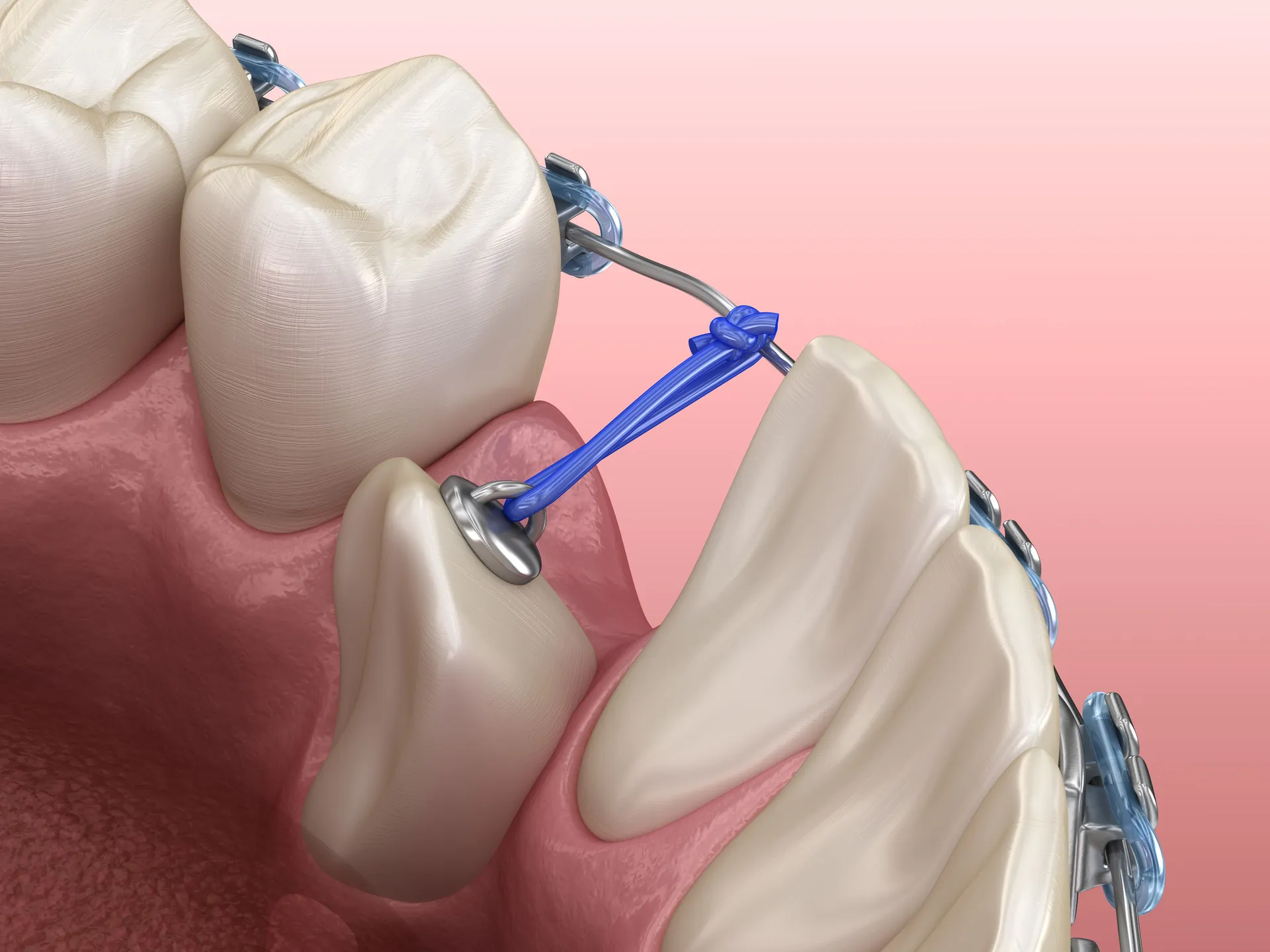
Specialized Impacted Canine Care
At Armitage Oral Surgery, Dr. Firas F. Katabi provides expert impacted canine treatment in Chicago, Illinois. Canine teeth play a critical role in your bite and smile, and when they fail to erupt properly, surgical exposure can help guide them into their correct position.
Working closely with your orthodontist, Dr. Katabi uses advanced 3D imaging and precise surgical techniques to uncover impacted canines and attach an orthodontic bracket, allowing your orthodontist to gradually move the tooth into alignment.
Oral & Maxillofacial SurgeryImpacted Tooth ExposureCone Beam 3D Imaging20+ Years Experience
What Are Impacted Canines?
An impacted canine is a permanent canine tooth (also called a cuspid or eye tooth) that has failed to erupt into its proper position in the dental arch. The upper canines are the second most commonly impacted teeth after wisdom teeth. When a canine becomes trapped beneath the gum tissue or bone, it cannot emerge on its own and requires treatment to guide it into place.
Canine teeth are essential for biting, tearing food, and guiding your jaw into proper alignment. They also play an important role in the aesthetics of your smile. Because of their importance, preserving impacted canines through surgical exposure is strongly preferred over extraction whenever possible.
When Is Treatment for Impacted Canines Recommended?
Treatment is recommended when a canine tooth has not erupted on its expected timeline or when imaging reveals it is positioned in a way that prevents normal eruption. Common indicators include:
- A baby canine tooth that has not fallen out by the expected age
- A noticeable gap or missing tooth in the upper arch where the canine should be
- An unusual bump or fullness in the gum tissue above the tooth line
- X-ray or CBCT imaging revealing a canine trapped in the bone or palate
- An orthodontist identifies the impaction during treatment planning
- Signs of cyst development or pressure on adjacent tooth roots
How the Impacted Canine Procedure Works
1. Evaluation and Imaging
Your visit begins with a clinical exam and advanced imaging, including cone beam computed tomography (CBCT), to determine the exact location and orientation of the impacted canine relative to surrounding teeth and structures.
2. Coordinated Treatment Planning
Dr. Katabi collaborates with your orthodontist to create a treatment plan. In many cases, orthodontic treatment begins before surgery to create space in the arch for the canine to move into position.
3. Surgical Exposure
Under local anesthesia with sedation as needed, a small area of gum tissue and bone covering the impacted canine is carefully removed to expose the crown of the tooth. An orthodontic bracket with a small chain is bonded to the exposed tooth.
4. Orthodontic Guidance
After a brief healing period, your orthodontist uses the attached chain to apply gentle traction, gradually guiding the canine through the gum tissue and into its proper position in the dental arch over a period of months.
5. Recovery and Follow-Up
Most patients resume normal activities within a day or two. Post-operative instructions are provided to support healing. Follow-up visits ensure the tooth is responding to orthodontic forces and moving as expected.
Benefits of Impacted Canine Treatment
- Preserves your natural tooth and avoids the need for an implant or prosthetic
- Restores proper bite function and jaw alignment
- Prevents cyst formation and damage to neighboring teeth
- Improves the aesthetics of your smile
- Supports long-term oral health and stability
For expert impacted canine treatment in Chicago, IL, contact Armitage Oral Surgery at 773-486-2220 to schedule your consultation.
Why Choose Us for Impacted Canine Treatment?
Preserve Your Natural Tooth
Surgical exposure guides the impacted canine into its correct position, preserving your natural tooth and avoiding the need for an implant or bridge.
Coordinated Orthodontic Care
Dr. Katabi works closely with your orthodontist to plan and execute treatment for the best possible alignment and outcome.
Prevent Complications
Early treatment reduces the risk of cyst formation, root resorption of neighboring teeth, and other complications from untreated impacted canines.
Sedation Options
IV sedation and general anesthesia are available so you can remain comfortable and anxiety-free during the procedure.
Advanced Imaging
Cone beam 3D imaging provides precise visualization of the impacted tooth and surrounding structures for accurate surgical planning.
Expert Surgical Care
Board-certified oral surgeon with specialized training in complex impaction cases and over 20 years of experience.
Concerned About an Impacted Canine?
Schedule your consultation with Dr. Katabi at Armitage Oral Surgery in Chicago, IL. We'll evaluate the position of the impacted tooth, review imaging, and coordinate a treatment plan with your orthodontist for the best outcome.
773-486-2220Frequently Asked Questions
Early evaluation is recommended around age 7–10 so that interceptive treatment can be planned if needed. Surgical exposure is most commonly performed during the teenage years, but treatment is available for adult patients as well.
Local anesthesia numbs the treatment area, and sedation options are available to keep you comfortable throughout the procedure. Most patients experience mild to moderate soreness afterward that improves within a few days.
After surgical exposure and bracket placement, orthodontic movement typically takes several months to over a year depending on the position of the tooth, the patient's age, and individual healing response.
Untreated impacted canines can lead to cyst formation, damage to adjacent tooth roots, infection, and loss of the permanent tooth. Early intervention provides the best chance for a successful outcome.