
No. A digital scanner uses optical light to capture surface detail and does not involve radiation. X-rays and CBCT visualize internal structures like bone and tooth roots.

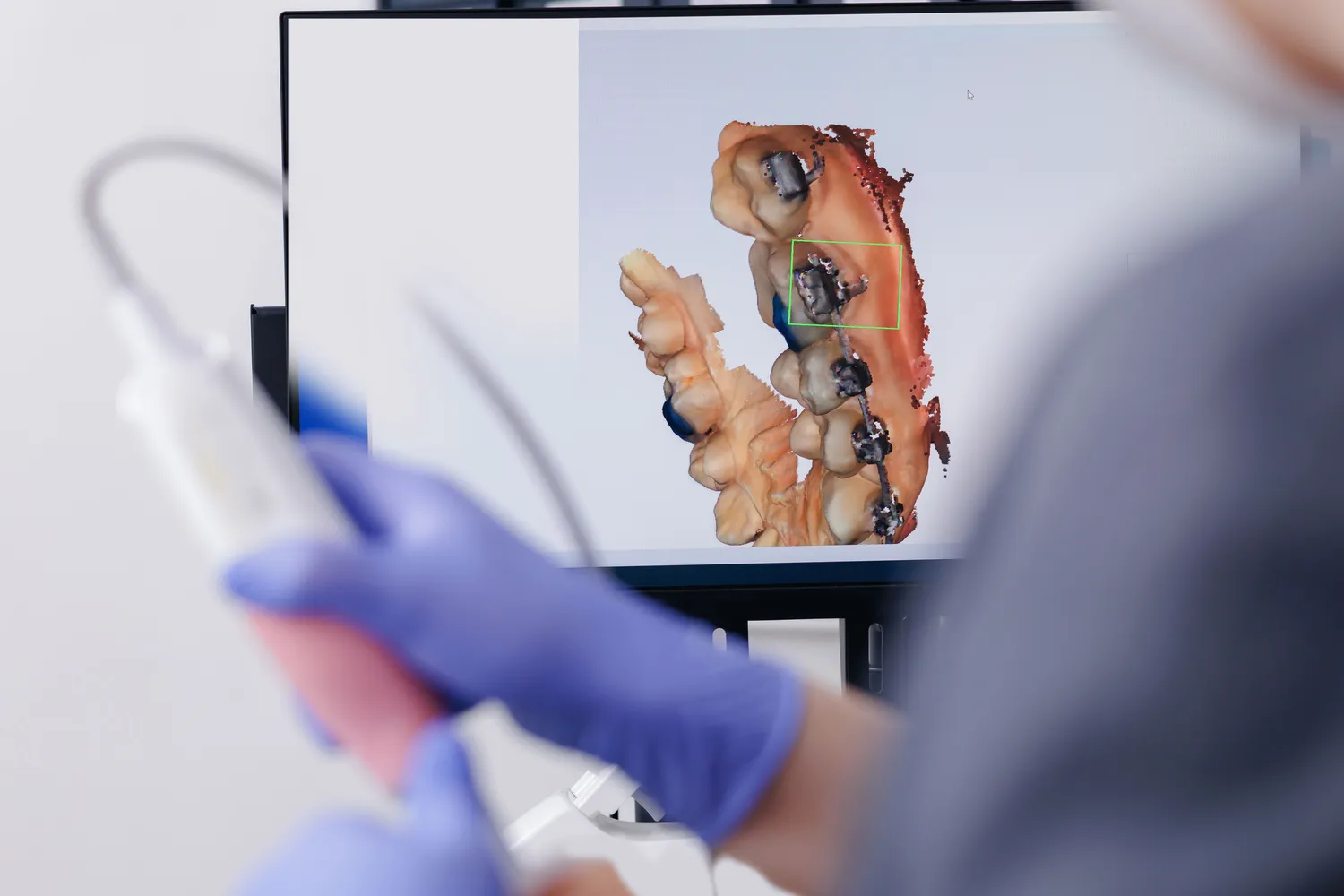
Digital Scanner in Chicago, IL: What Patients Should Know
The digital scanner at Armitage Oral Surgery creates precise, 3D models of your teeth and gums without messy impression trays. Patients seeking a digital scanner in Chicago, Illinois, often want to know how it works, why it is used, and what to expect during a visit.
Digital Scanner Explained
A dental digital scanner, also called an intraoral scanner, uses a small handheld wand and safe optical light to capture thousands of images and stitch them into a detailed 3D model of your mouth. Unlike traditional impressions that use putty, the scanner records digital impressions in real time. Because it relies on optical capture, a digital scanner does not use ionizing radiation.
Why Consider Digital Scanning?
- Improved comfort for patients who dislike impression trays or have a strong gag reflex.
- High accuracy that reduces remakes and improves the fit of restorations and guides.
- Faster appointments with immediate on-screen previews of your digital impressions.
- Clear communication since you and your clinician can view the 3D model together.
- Efficient planning for implants, extractions, bone grafting, and surgical guides.
- No radiation exposure because the system captures images using light.
How Digital Scanning Works
- Preparation: Your teeth are dried and the scanner tip is positioned for a clear view.
- Capture: The wand is moved around your teeth and gums while the software builds the 3D model in real time.
- Review: You and your clinician can view the completed scan together on screen.
- Use: The digital model is used for treatment planning, surgical guides, or restorations.
For questions about digital scanning in Chicago, IL, or to plan your visit, contact Armitage Oral Surgery at 773-486-2220 to schedule with Dr. Firas F. Katabi.
Ready for a Comfortable, Impression-Free Scan?
Schedule your appointment with Dr. Katabi in Chicago, IL. Experience fast, accurate digital scanning for precise treatment planning without traditional impressions.
773-486-2220Frequently Asked Questions
Most full-arch scans take only a few minutes. Small areas are even faster. Extra time may be added if refinement scans are needed for optimal precision.
Modern scanners provide excellent accuracy for many procedures and help reduce remakes. In some complex cases, your clinician may combine scans with other records for the best result.
Yes. The scanner uses light, not ionizing radiation. As with any dental visit, share your medical history and pregnancy status so the team can tailor your care.
Digital scanners capture a wide range of clinical situations. Your clinician may take extra passes over reflective or metallic areas to ensure complete data.
Routine brushing and flossing are usually enough. Arrive with clean teeth, remove removable appliances if asked, and let the team know about any gag reflex concerns.